Totnes High Street
The High Street, as source of livelihoods and jobs, basic provisions and luxuries, business and investment deal making, plays an incredibly important role in the local economy. It’s make up of shops, cafes, offices and other sorts of shopfront concept plays setting to the kinds of characters naturally drawn to such a scene, who animate it with their behaviours and chatter, co-creating social and cultural identity.
Think about some of your favourite towns and city neighbourhoods, their local flavour, and you will most likely conjure images of street scenes with shops, cafes, comfortable perches, people, and life. Now think of its opposite, “Clone Town”, the new economics foundation invented epithet that captures perfectly when the local flavour has been assimilated and replaced by an unnatural facsimile.
That alone makes the High Street of central interest to Transition, authentic life is more resilient than a fake one, but there’s more. The more walkable these places are, the lower their carbon footprint. Better public transport and fewer cars on the road, generally, as well as specifically on the High Street, means better air quality, which is obviously directly linked to the health of the community. In our democracy it is also a civic place.
The recent history of Totnes High Street would make an interesting case study, actually several case studies, for graduate students studying a range of disciplines. For the moment, here are condensed points for us to consider:
There has been a variety of groups working separately and/or collaboratively in pursuit of their own goals – the cast of characters: Chamber of Commerce, Town Council, SHDC, DCC, TTT, TDT, PSF, TTF, TOTM, Independent Traders Association, Costa, No to Costa, Adios Costa, Take Totnes Back, and the gas company.
There was an event to celebrate the independent cafes and coffee bars and a march to the local seat of power to say no to Costa. A new network of these businesses formed to protect their interests. Citizens and activists organised themselves. Local politicians organised themselves, too. Costa won the planning battle but in face of this organised coalition decided to retreat anyway. But then, local Costa supporters were disappointed and some of them organised, too, which led to a hostile Facebook thread that lasted for weeks and an “expose” by the owner of a local radio station. Currently, the vacant shop is now a bustling pop-up shop run by a collective of 80 artisans for a few weeks, and it has been enthusiastically supported by the community.
On another issue, there’s a working group of local citizens called Totnes on the Move (TOTM) Community Board which is working with Devon County Council (DCC) to invest in projects to make the local transport system more sustainable. Projects under consideration for the High Street have included limited pedestrianisation, shared space, and traffic calming. DCC must do something because pedestrians are being struck by vehicles on a regular basis and is now changing direction of travel on a road segment. Merchants and the Chamber of Commerce are quite vocal about their requirements concerning footfall, traffic flow, parking, easy access, deliveries, etc. When TOTM and DCC organised Car Free Day, closing the street to car traffic for an afternoon, it ignited the fury of a small number of merchants, the negative energy of which reverberated for months afterward in town council meeting and in letters to the Totnes Times.
There are lots of other stories, of course, but these scenarios included lots of TTT involvement, interesting results, and openly hostile opposition. While the “openly hostile” bit is upsetting, the basic mode for TTT at the moment is listening and openness as lessons are being drawn from this unfolding experience, lessons that we’re sure to revisit in future posts.
But there are some obvious observations worth considering right now. There are lots of networks of people concerned with the High Street, each with their own frames of reference, their own perceptions of their needs and how they can be satisfied, opportunities for collaboration and confrontation. Engaged in this dynamic, it was natural that TTT, like every other organised group, would gain allies and incite rivalries. Reaching out to new collaborative partners, as TTT has done, has created positive results and begun a process of evolution that will likely continue through the next year with new collaborations hopefully taking shape. This is grass roots politics with a small “p”.
Surely, forging new relationships with new people is a good thing. Graham, in his excellent piece the other day suggests Maslow may provide some insight into understanding the needs of diverse groups on the High Street. Here in Totnes, there are people interested in the work of Manfred Max-Neef for similar reasons. Perhaps theories such as these may provide some insights that can enlarge frames, unlock new behaviours, and highlight common ground on which new coalitions working for positive change on the High Street can take root. It’s possible, at least, that they can set the stage for the big questions that we must ultimately engage with together. Who and what is the High Street for? Who decides, and how?
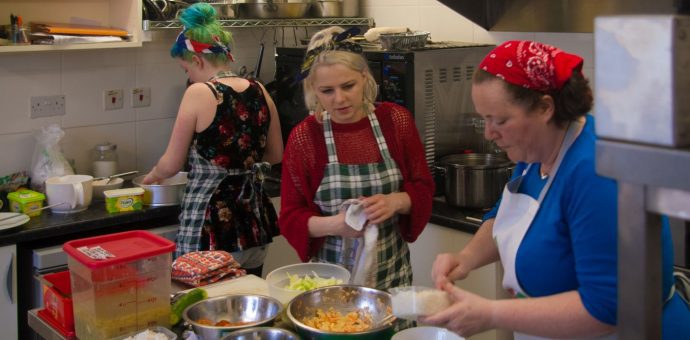
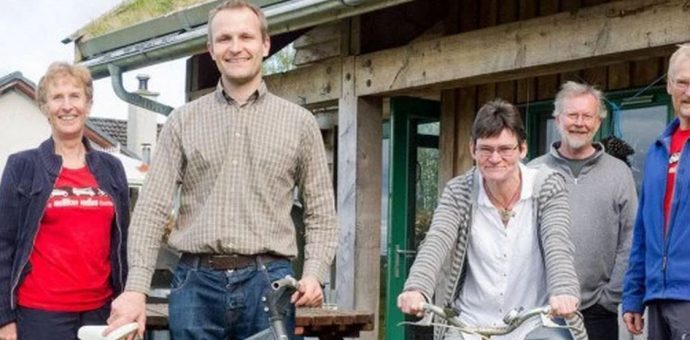
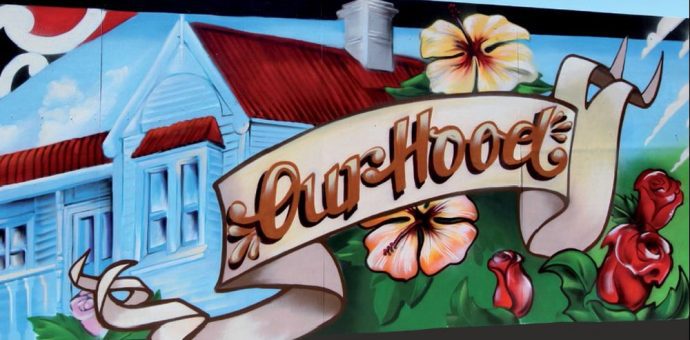
Images: Totnes Late Night Shopping; Sign outside Fat Lemons; Frances and Mary at the TTT table, Car Free Day.
- Login or register to post comments
- del.icio.us

Thanks for the insights, Jay.
14 December 2012 - 12:34pm — Caroline JacksonThanks for the insights, Jay. As usual Totnes seems to cram in more incipient change per sq metre than any other initiative. I guess your experience has a lot of relevance for the kinds of places Kerry described yesterday, where a fragile infrastructure that supports sustainability could be so easily lost. It is more difficult to know what to do in places like Lancaster - towns that have lost out almost completely to the chains in their high streerts and in our case about to be swamped by a new out of centre retail development that will withdraw yet more trade into the hands of big outlets. The decisions are in the hands of politicians and council officers living in never never land - where do we start?
thank goodness for Totnes
19 December 2012 - 11:39am — Jo Homansomeone was telling me yesterday that Dorchester, a town that has quite a romantic literary resonance for me, is another clone town. So it's always heartening to hear how well Totnes is withstanding this and probably growing in strength in the process.
It's interesting what you say about going down the conflict path, the "openly hostile" bit being upsetting. I have opened the conflict can of worms at a project in Finsbury Park and it seems that every day there's a new drama that someone should make into a soap opera; accusations, managerial flexing of muscles over the most petty things, 'official emails', people blanking each other, swearing. It's hugely draining of energy and time, and frankly, a bit of a downer. It feels like the power imbalance forces one's hand, you have to take them on, and then you have to deal with this wildly uncontrollable series of repercussions. I have to keep on reminding myself what it is that we really want to achieve and not to get caught up in glee/vindictiveness/smugness/self-righteousness/anger. I suspect that the journey for you lot has been/is being similarly taxing and I truly hope you Totnesians find your Silent Night moment during the no man's land of the holiday season!