Skip to Main Content

Talking Economic Literacy

Economics is the “dismal science” and the boringest topic on the face of the earth. Unless, of course, you’re a privileged middle-aged white man surrounded by a gaggle of other privileged middle-aged white men, then it’s the field of honour upon which the status of smartest man in the universe can be deftly and decisively proved. Look out fools, this domain is best left to "very serious people".

So far, this state of affairs has worked out pretty well for the ruling classes, whose interests have been well served by a technocratic discipline so devoid of life that few with a pulse will go near it, study it, understand it, question it. But if we are to realise a transition from a carbon intensive, inequitable economic system to one that’s low carbon, fair and socially just, that respects natural limits, and indeed, can begin to regenerate biodiversity and ecosystems, then we had better start educating ourselves.

Economics is neither dismal, nor a science, and it’s far too important territory to be ceded to the ostensibly very serious people who would know best. Few Transitioners would disagree that developing ecological literacy, both personally and throughout society, is vitally important. I would argue that economics is a subset of ecology and that developing economic literacy is also vitally important. If ecology is the study of how living things make their livings in the context of a web of interrelationships, then economics is the study of how we make our livings in the context of a web of interrelationships. Seen in this light, economics can be an exciting path of enquiry, full of life and open to everyone.

Understanding theories about how the current economic system works, the critiques of these theories, and the new economics being put forward as possible solutions, makes us more effective activists and more capable citizens. We owe it to ourselves and our progeny to educate ourselves, no? Wake up and smell the coffee, lift the veil, remove the scales from our eyes, get up and leave the cave and get out into the bright light of day – isn’t this the moral imperative of our times? Every Transitioner should at least be able to explain the local multiplier effect, yes?

In this regard, we’re quite fortunate that there are so many resources available for self education, especially in recent years. Online there’s the new economics foundation (neweconomics.org) and Transition’s own REconomy Project (REconomy.org), both of which provide good content or sign posting to where it can be found. YouTube is chock full of lectures by well-known economic thinkers, scholars, critics, and researchers. Offline, there are probably 1000 different books by a 1000 different authors that would be relevant to most Transitioners – reading them all is not required, but who are the must reads? Tim Jackson, Charles Eisenstein, Michael Shuman, Karl Marx, John Maynard Keynes? (Perhaps readers of this post will add their recommendations in the comments?)

We’re fortunate here in Totnes, as well. Schumacher College is so close and we have a great working relationship with them. Not only do they run the year-long MSc. Economics of Transition course, which we’ll hear more about tomorrow, but several short courses a year that deal with new economics. As a result, there’s a steady stream of interesting people coming through who make themselves available for public talks. Coming up next month are Vandana Shiva and Cormac Russel, for example.

Last year, we hosted about 15 talks, including speakers from Schumacher and local experts, and this year we hope to do the same. Last year, all of our talks were by privileged middle-aged white men. Perhaps that’s the nature of the beast as the field is dominated men who populate the think tanks and the teaching circuit. However, we’re determined to change that. Tomorrow evening, Inez Aponte will give a talk on the work of Manfred Max-Neef, in the first of what we hope to be many more women speakers we host. If our task is to increase economic literacy amongst ourselves and in the community, creating opportunities for people to come together to hear a diversity of voices seems a vitally important activity. It will make economics accessible, lively, and relevant, too.

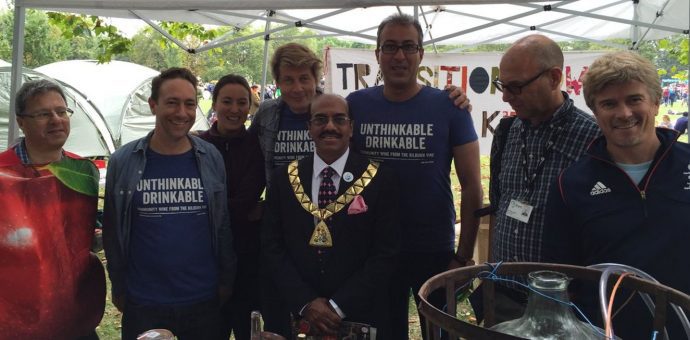
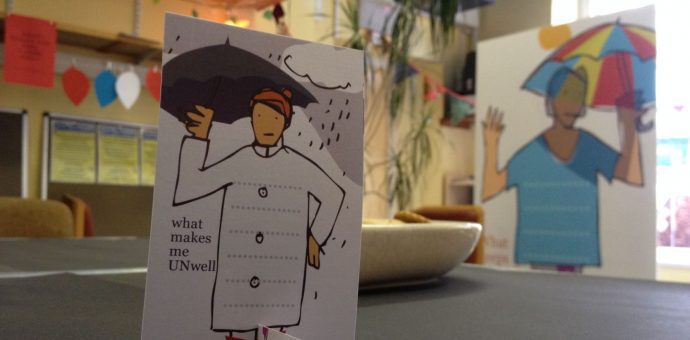
Images: very serious person; new economy postcard; Vandana Shiva

Comments

cruxcatalyst's picture

Worth Investigating

Thanks for this piece!

In terms of actual economists, Steve Keen would be another addition for a bunch of reasons, not the least of which was being one of the few economists to predict the GFC:

http://rwer.wordpress.com/2010/05/13/keen-roubini-and-baker-win-revere-a...

I'd add in Chris Martenson: http://www.peakprosperity.com/crashcourse

Helena Norberg-Hodge: http://www.theeconomicsofhappiness.org/helena-norberg-hodge-full-bio

In fact, have a look through the EnRich List (a cheeky take on the Forbes Rich List) curated by the Post Growth Institute:

http://enrichlist.org/the-list

There are some economists included, but also wide variety of amazing people whose thinking and work has, and will have, an impact on the world.

I would also like to suggest a friend and colleague of mine, co-founder of the Post Growth Institute (http://postgrowth.org) an amazing young man called Donnie Maclurcan (based in Sydney) as a 'watch this space' influencer in this field:

http://postgrowth.org/learn/how-on-earth/

This talk is long (50 minutes) but well worth the time, I promise you.

Simeon Jackson's picture

Positive Money

Very relevant quote by Herman Daly from Positive Money at http://www.positivemoney.org/consequences/environment/:

The Economy is a wholly owned subsidiary of the environment, not the reverse